
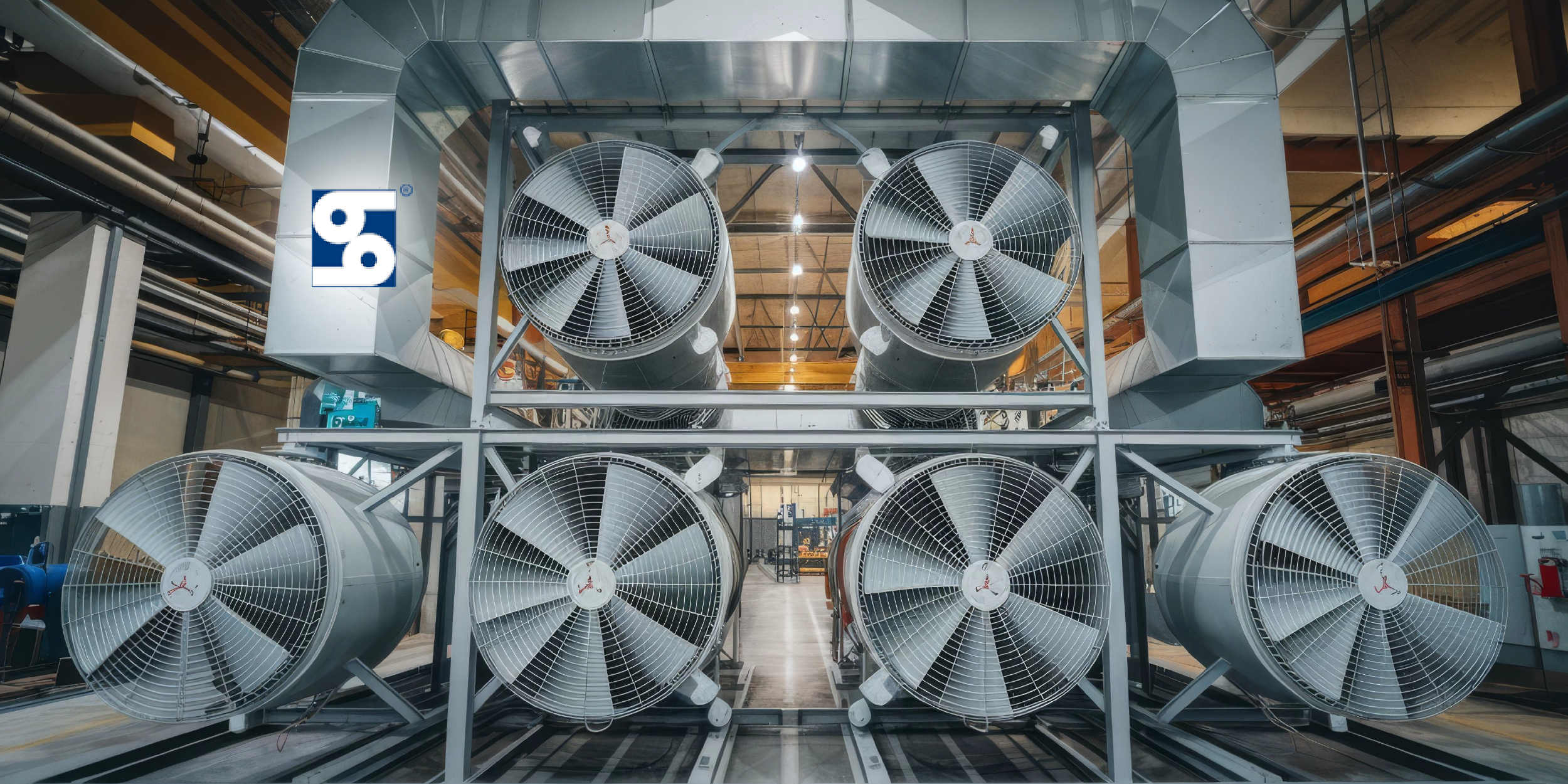
In order to provide pleasant and productive industrial workplaces, it is crucial to maintain efficient airflow. Heat, odours, dust, and stale air may rapidly build up in factories, warehouses, workshops, processing facilities, and other business locations. These circumstances might have an impact on worker comfort, equipment performance, and the general working environment if there is insufficient ventilation.
The purpose of industrial ventilation systems is to maintain air movement and provide regular air exchange. The axial flow fan is one piece of equipment that is often used for this purpose and offers a useful way to move large amounts of air across industrial facilities. It is appropriate for a variety of ventilation and extraction applications due to its simple working concept.
Comprehending Axial Airflow
Air is typically moved by axial fans in a direction parallel to the fan’s revolving shaft. Air is drawn from one side and forced through to the other by the rotating blades. When a lot of air has to be evacuated or circulated, this continuous directed airflow might be helpful.
Axial designs are especially well-suited for applications requiring large volume airflow with relatively little resistance, in contrast to ventilation equipment designed to generate very high pressure. They might be integrated into walls, ducts, equipment, ventilation systems, or specific extraction settings, depending on the installation.
Encouragement Of Fresh Air Exchange
Enclosed spaces with restricted natural ventilation are common in industrial structures. While industrial procedures may introduce odours, fumes, dampness, or airborne pollutants, machinery may produce heat throughout a working shift.
Fresher air may circulate throughout the building while heated or stale air can be removed with the aid of an axial flow fan. Large industrial facilities may seem less stagnant and provide a more tolerable work environment with efficient air exchange.
Installing a fan alone is not enough to make any ventilation system functional. When designing ventilation, its location, airflow capacity, building layout, and the nature of the job being done should all be taken into account.
Controlling Heat In Industrial Environments
In buildings with motors, industrial machinery, electrical equipment, or heat-producing activities, heat may become a serious problem. Temperatures may rise to unpleasant levels when warm air is trapped within a structure.
This stored heated air may be moved away from equipment and work areas with the use of axial fans. By promoting steady air circulation, they may also assist more comprehensive cooling techniques. Planned ventilation aids in more efficient air distribution and replacement by preventing pockets of heated air from remaining in certain locations.
In big workshops and warehouses, where traditional comfort cooling may not always be the best option for the whole structure, this strategy can be quite helpful.
Adaptability In A Variety Of Industrial Settings
The flexibility of axial fan technology is one of its benefits. For general ventilation, exhaust applications, equipment cooling, and process-related airflow, many designs and sizes may be used.
They may be used by manufacturing facilities to facilitate air exchange in the vicinity of industrial areas. Large storage areas in warehouses may be made less stagnant by using ventilation. Extraction may be necessary in workshops near places that produce heat, fumes, or odours. Reliable air circulation may also be advantageous in agricultural and industrial operations where environmental conditions need constant control.
Because airflow needs might differ significantly across facilities, it is crucial to choose equipment based on the particular application.
Selecting The Appropriate Equipment
The requirements of the operational environment should be taken into consideration while choosing industrial ventilation equipment. The decision may be influenced by a number of factors, including the amount of airflow needed, the amount of space available for installation, the layout of the ducts, the operating temperature, noise concerns, and exposure to moisture or dust.
In demanding jobs, durability is especially important. Regularly used equipment in industrial settings must be suitable for the circumstances in which it is anticipated to operate. Over time, consistent performance may be further supported by proper installation and regular maintenance.
Therefore, selecting the right axial flow fan involves more than just locating an air-moving fan. It entails adapting design and airflow characteristics to the particular ventilation problem.
Improving Industrial Airflow
An essential component of industrial facility design is adequate ventilation. Axial fans may promote more pleasant and productive workplaces by eliminating stale air, promoting fresh air exchange, and assisting in the management of collected heat.
Axial fans provide an effective method for large-volume airflow in a variety of industrial situations when properly chosen and positioned. Effective airflow helps create an atmosphere where people, processes, and equipment can function better, from bustling production floors to warehouses and workshops.

Oliver is a passionate writer and blogger, primarily focusing on business growth and management. With a keen interest in exploring the dynamics of entrepreneurship, Oliver delves into topics ranging from innovative strategies to leadership insights. Alongside his professional pursuits, he nurtures a love for travel, especially in search of culinary adventures. Through his writing, Mark aims to inspire and inform readers, sharing valuable insights into the worlds of business and gastronomy.